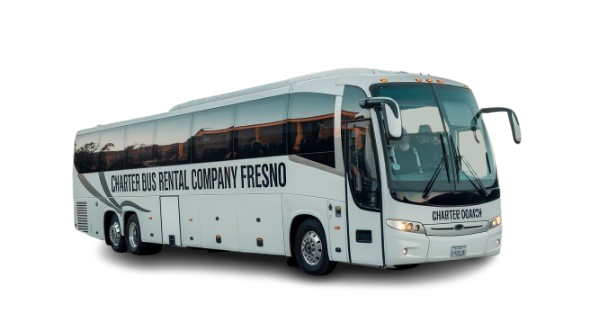
Fresno businesses along the Shaw and Herndon corridors face a familiar problem at 8:00 AM and 5:00 PM. Parking lots fill, staff arrive scattered across half an hour, and a growing headcount outpaces the spaces the building was designed for. A standing employee shuttle turns that daily scramble into a predictable, scheduled run. It also sends a quieter message to staff, that the company noticed the parking headache and did something about it.
We set up commuter and employee shuttles for companies across the Fresno area, from a single morning park-and-ride loop to a full week of staffed runs. This guide covers how an employee shuttle works locally: where to set pickup points, how to time the runs around shift changes, what affects the cost, and how a trial week grows into a standing route. If you already know your route and headcount, you can request pricing for your trip and we will build a schedule that fits.
Why employers set up a standing shuttle
An employee shuttle solves problems that hiring more parking cannot. When a campus runs short on spaces, a shuttle from a remote lot or a transit point lets staff park once and ride in together. That frees up close-in parking for clients and visitors, and it cuts the number of cars arriving at the gate during the morning rush.
The employers who benefit most are growing companies that outgrew their lot, distribution and warehouse sites with staggered shifts, and offices that want a commuter perk without buying real estate. A park-and-ride loop also helps during construction or special events, when normal parking disappears for weeks at a time. The shuttle keeps people arriving on time and keeps the lot from becoming a daily bottleneck.
There is a retention angle that often matters as much as the parking math. A reliable commuter ride is a real perk for staff who would otherwise burn gas and patience fighting Shaw Avenue twice a day. Employees who park once at a free remote lot and ride in together tend to arrive less frazzled, and a few report they would rather read or rest on the ride than sit in their own car at a light. For a company recruiting hourly workers in a tight labor market, a shuttle can be the small difference that keeps a shift fully staffed through the week.
The cost side works in the employer’s favor more often than people expect. Building new parking is expensive and permanent, and a leased overflow lot ties up cash every month whether it is full or not. A shuttle is a flexible line item you can scale with headcount, pause during a slow stretch, or expand when a project ramps up. That flexibility is the main reason a growing company reaches for a shuttle before it reaches for a bulldozer.
Setting pickup points across Fresno business corridors
Most employee shuttles run between a remote lot or a transit hub and the worksite. The route depends on where your staff live and where you can stage a park-and-ride lot. Around Fresno, the practical staging areas cluster near the Shaw corridor, the River Park and Herndon area, and downtown near the major employers. We pick points with easy in-and-out access so the loop stays on time during rush hour.
A good staging lot is more than open pavement. It needs a clear place for the bus to pull in off the street, enough employee parking that staff are not circling for their own spot, and an entrance that is safe to walk to before dawn in winter. We also look at the turn the driver makes leaving the lot, since a left across a busy six-lane arterial at 7:00 AM can cost the loop several minutes every run. Where possible we set the pickup so the bus turns right out of the lot and right again toward the worksite, which keeps the timing tight and the route repeatable.
The drop-off side deserves the same thought. A worksite with a gated yard or a badge-only lot needs a plan for where the bus stops and how riders get from the curb to the door. We sort out gate access, a safe walking path, and a consistent drop point before the first run, so nobody is stranded outside a locked gate at shift start. For multi-building campuses, a single well-placed drop usually beats winding the bus through the site, since a short walk is faster than a slow crawl past every entrance.
For companies near River Park and Herndon, a hotel parking arrangement can double as a clean staging point. Two properties on North Fresno Street sit side by side and make a convenient anchor for a morning gather-and-go.
A Marriott all-suite hotel with 118 rooms in the Herndon and River Park area, easy to reach off Highway 41, which makes its lot a practical morning staging point for a park-and-ride loop into a nearby office.
6844 N Fresno St, Fresno, CA 93710
marriott.com
Right next door, an extended-stay property gives a second option if your staging lot needs more room or you are also lodging out-of-town workers during a project ramp-up.
A Hilton extended-stay hotel with 116 all-suite units and full kitchens at Herndon Avenue and Fresno Street, with quick Highway 41 access, useful when a project brings in temporary workers who also need a longer stay near the worksite.
6820 N Fresno St, Fresno, CA 93710
hilton.com
If your staff cluster on the east side toward Clovis, staging a pickup from Clovis can shave time off each run and shorten the average commute for that group.
Planning the route: shifts, headcount, and budget
An employee shuttle is built around your shift schedule. We need to know when shifts start and end, because that tells us how many runs to make and whether one vehicle can cover the demand or you need two during peak. A single morning and evening loop is the most common setup, but multi-shift sites often want midday runs too.
Most employers start small and grow the route from there. A trial week is the easiest way to see real ridership before committing to a standing contract. We run the route for five days, watch how many people actually board each loop, and note where the timing runs tight or loose. After that week, we tune the schedule to the real pattern, which almost always differs a little from the plan on paper. A couple of riders shift to the earlier run, a stop turns out to need an extra five minutes, and the route settles into something the team can rely on.
Lead time for a standing shuttle is shorter than for a big event, but earlier is still better. A week or two of notice lets us assign a consistent vehicle and, ideally, the same driver, which matters more than people expect. A driver who runs your route every day learns the riders, the gate code, and the one stoplight that always backs up, and that familiarity keeps the loop on time. Ongoing routes work on a simple confirmation: we set the weekly schedule, you confirm the days and hours, and a deposit holds the standing booking so the vehicle is reserved for your route each week.
Here is what we ask for to build the schedule:
- Your daily headcount and how many will ride the shuttle.
- Shift start and end times, including any staggered crews.
- The staging lot or transit point where staff will gather.
- The worksite drop-off zone and any gate or badge access.
- How many days a week you need coverage.
- Any accessibility needs among your staff.
- Whether the demand is steady or tied to a temporary project.
A handful of factors set where your rate lands. Daily hours matter most, since a route that needs the vehicle held between the morning and evening peaks costs more than two short, separate loops. The number of days a week scales the package, so a five-day route prices differently than a three-day one. The route length and the number of stops play a part, and a single direct hop is cheaper to run than a winding loop with several pickups. Steady weekly contracts also price better per run than scattered one-off days, because a fixed schedule lets us assign the same vehicle and driver instead of juggling the calendar.
As a rough guide, a shuttle bus for commuter runs typically runs about $155 to $450 per hour, or $1,520 to $3,655 for a full day, depending on the hours and how many days a week you book. Ongoing weekly contracts are quoted as a package, not per ride. For exact pricing, call 559-336-8670, or review our charter bus prices page. Many of these accounts start as a single trial week, the same kind of one-off booking we set up for company holiday party and team outing rides before it grows into a standing route. Employers who run regular routes often fold them into one corporate transportation account so billing and scheduling stay in one place.
Choosing the right vehicle for daily commuter runs
The vehicle depends on how many riders you move per run and how often the loop repeats. For a steady commuter route with frequent stops, a shuttle bus with low steps and wide doors loads quickly and keeps the schedule tight. For a smaller crew or a short staging-lot hop, a 25-passenger minibus is nimble and turns around fast at the gate.
If your worksite has a big shift change all at once, a higher-capacity vehicle cuts the number of loops and gets everyone in before the bell. The math is the same one we run when planning Fresno Convention Center conference transportation, where a crowd arrives in a tight window and steady boarding beats raw size. We will recommend the fit once we see your headcount and shift pattern. The aim is reliable, on-time runs that your staff can plan their morning around.
Frequency is the lever most people overlook. A larger vehicle running one loop and a smaller one running two loops can move the same number of people, but they feel different to riders. A bus that comes every fifteen minutes forgives a missed run, while one that comes once means a late employee waits a full cycle. For a single-shift office, one right-sized loop usually does the job. For a site where people drift in across a wider window, two tighter loops on a smaller vehicle often serve the team better than one big run. We weigh that trade-off with you rather than just defaulting to the largest bus.
A sample weekday employee shuttle schedule
Picture a single-shift office of 40 riders staging from a park-and-ride lot. Here is how one shuttle bus might cover a standard weekday.
- 6:45 AM first morning run departs the staging lot.
- 7:15 AM second morning run for the later arrivals.
- 7:30 AM to 4:30 PM vehicle staged or released, depending on your contract.
- 4:45 PM first evening run returns staff to the lot.
- 5:15 PM second evening run for anyone working late.
- 5:30 PM route complete.
Multi-shift sites add midday runs and a late return for the closing crew. We refine the times with you after the first week, since real ridership always settles into a pattern. A short buffer built into each run absorbs the normal day-to-day variation, so one slow traffic light does not cascade into a late drop. The result is a commute your team can set a watch by, and a parking lot that finally has room to breathe.
From there, a route tends to grow on its own. A single morning-and-evening loop proves the concept, then a second crew asks to be added, or a nearby building wants in on the run. Because the schedule is already built and the driver already knows the corridor, scaling up is mostly a matter of adding a stop or a loop, not starting over. That is how most of these accounts mature, from one trial week into a standing fixture of the workweek that staff stop thinking about because it simply shows up.