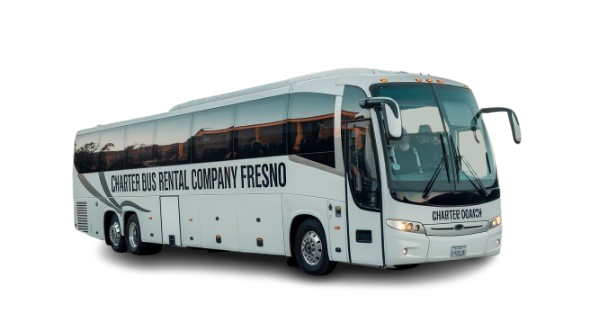
A company retreat works best when the team travels together, and that is hard to pull off when 45 people caravan in their own cars to the coast or wine country. Half the group hits traffic, a few take a wrong exit near Pacheco Pass, and the offsite that was supposed to start at noon starts whenever the last car rolls in. Putting the whole team on one charter bus fixes the arrival problem before the agenda even begins. It also removes the quiet stress of expense reports, rental cars, and figuring out who knows the way once the group leaves the valley floor.
We move corporate groups from Fresno to retreat destinations across the coast and the Central Coast wine country. This guide covers the two most common runs, Monterey and Paso Robles, with verified drive times, plus how to plan the schedule, what shapes the cost, and how to pick the right coach. If your dates are set, you can request a quote online and we will map the route and the stops with you.
Why a retreat runs smoother on one coach
The point of an offsite is to get people out of the office and into the same room, ideally together. When everyone drives separately, that togetherness starts late and the day loses its first hour to stragglers. A single coach means the team leaves as a group, arrives as a group, and starts the offsite on time.
The companies that gain the most are those with a real travel leg, two hours or more each way, where solo driving eats the day and adds expense reports for gas and parking. A coach also turns the drive into usable time. Leadership can run a quick kickoff on the way out, and the ride home becomes a relaxed debrief instead of a tired commute. Nobody has to be the designated driver after a wine-country dinner either, which matters when the retreat includes a tasting or a reception.
There is a real cost story behind the convenience. A 45-person caravan means a dozen or more rental cars, fuel for each, parking at the resort, and the time leadership spends chasing down who is riding with whom. Rolling all of that into one coach usually lands at or below the all-in cost of mileage reimbursements and rentals, and it arrives as a single, clean invoice your finance team can book in one line. The travel also stops being unmanaged. Instead of fifteen drivers each making their own choices on US-101, one professional handles the route while your people work, rest, or talk.
The team-building value starts before anyone reaches the venue. Two-plus hours on a coach is unstructured time the group rarely gets, and conversations happen across departments that would never share a car otherwise. Some companies lean into it with a short agenda on the way out, others just let people settle in. Either way, the offsite effectively begins the moment the doors close, not when the last car finally parks at the resort.
Running the coast and wine-country routes from Fresno
The two destinations companies ask about most are Monterey for a coastal conference setting and Paso Robles for a vineyard retreat. Both are reachable in a single comfortable drive, and both have a clear anchor venue. We stage the pickup at your office or a central lot, then run the route non-stop or with one rest break depending on the distance.
Monterey is the coastal option, reached over Pacheco Pass and down US-101. The downtown conference center is the natural hub for a corporate offsite there.
A city-owned conference center in downtown Monterey, renovated and reopened in 2018, with roughly 41,000 square feet of flexible meeting and banquet space including a 19,150-square-foot exhibit hall, which suits a multi-day corporate program by the coast.
One Portola Plaza, Monterey, CA 93940
montereyconferencecenter.com
From central Fresno, Monterey is about 155 miles and roughly two hours and 40 minutes non-stop, so we usually plan one short stop near Pacheco Pass on the way out. The route climbs over the pass past the San Luis Reservoir, then drops toward Gilroy before meeting US-101 and turning for the coast. It is a steady drive with a couple of grades, which is exactly the kind of leg where a full coach earns its keep over a string of personal cars. The one variable to watch is weekend traffic over the pass and through the 101 corridor, so we time the departure to clear the worst of it. For a wine-country retreat instead, Paso Robles offers a resort setting where the lodging, meeting space, and grounds sit together.
Choosing between the coast and wine country
The two destinations suit different goals, and the choice usually comes down to the kind of retreat you want. Monterey works when the program is the point, with real meeting space, a walkable downtown for evening dinners, and the coast as a backdrop for a multi-day conference. Paso Robles works when the goal is to get the team somewhere relaxed and self-contained, with sessions, meals, and an evening gathering all on one property. The shorter Paso run also leaves more of the first day for the agenda, while Monterey trades that for a wider range of restaurants and a coastal setting people remember.
A Tuscan-style vineyard resort in Paso Robles with on-site vineyards, a courtyard, event lawns, a spa, and full hotel rooms, which lets a company keep lodging, sessions, and evening gatherings on one property.
2700 Buena Vista Dr, Paso Robles, CA 93446
allegrettovineyardresort.com
Paso Robles is about 110 miles from Fresno, roughly two hours via Highway 41 and Highway 46, so it is the shorter of the two runs. That route heads south on Highway 41 and connects to Highway 46 toward the wine country, a quieter drive than the coastal run with fewer traffic pinch points. Either way, the coach stays with your group for the duration, so evening dinners and side outings do not require anyone to drive.
Both destinations also raise the question of where the coach stays overnight and how it stages for evening runs. For a resort like the one in Paso Robles, the bus can usually park on or near the property, ready for a winery dinner run after sessions. In a downtown setting like Monterey, parking is tighter, so we plan a staging spot and a clear pickup point ahead of time. We sort all of that during planning, so on the night of a group dinner the bus is simply waiting at the door rather than circling for a place to wait. That evening run works much like a company holiday party and team outing ride, with the coach on hand so nobody has to drive after a meal with wine.
Planning the retreat: itinerary, headcount, and budget
A retreat coach is booked for the whole window, not just the two travel legs. We need your departure time, your return day, and your call on having the coach stay on site or return and come back. Most multi-day retreats keep the coach available for evening dinners and a group excursion, which is where the day-rate structure makes sense.
The single biggest planning decision is whether the coach stays on site or deadheads home between the travel legs. For a one-night retreat, keeping the coach with the group is almost always simpler and often cheaper than sending it back to Fresno and bringing it out again. The bus is then on hand for an evening dinner run or a morning excursion without a second mobilization. For a longer program where the team has no plans to move for a couple of days, returning the coach and bringing it back for the trip home can make sense. We walk through both options and price them so you can see the trade-off clearly.
Booking lead time runs longer for these trips than for an in-town shuttle. Multi-day retreats tie up a coach and a driver for the whole window, so popular spring and fall dates fill early. We recommend reserving as soon as the dates and rough headcount are set, ideally a month or more out, especially for a Monterey or Paso Robles weekend. A deposit holds the coach and the driver for your window, and we confirm the fine details, the evening runs, the exact pickup time, as your agenda firms up in the final couple of weeks.
Here is what we need to plan it:
- Your total headcount and any plus-ones or vendors riding along.
- The pickup location and the departure time.
- The destination venue and your lodging property.
- How many days the coach is needed and whether it stays on site.
- Any evening dinners or side outings during the retreat.
- Luggage volume, since multi-day trips need bay space.
- Whether the coach stays on site or returns between legs.
A few things drive the price on a retreat. Distance and total days are the biggest, since a two-day Monterey program covers more miles and more hours than a single overnight in Paso Robles. Keeping the coach on site adds driver lodging for the night, which we factor into a multi-day package up front so there are no surprises. The date matters too, with peak-season weekends pricing higher than a midweek trip. Evening dinner runs and side excursions add hours to the day, so a retreat that uses the coach each night costs more than one that only needs the two travel legs. We lay these out clearly so you can decide where to spend and where to trim.
For reference, a 50 to 56 passenger charter bus generally costs around $180 to $500 or more per hour, or $1,800 to $3,800 for a full day, depending on the date, the distance, and how many days you keep the coach. Multi-day retreats are quoted as a package with overnight driver lodging factored in. For exact pricing, call 559-336-8670, or see our charter bus prices page. If your company also runs in-town events, we can fold a retreat into the same corporate transportation account.
Matching the coach to a multi-day offsite
For a real travel leg with luggage and a full team, a full-size coach is the right tool. A 56-passenger charter bus carries a large department with room to spread out, under-floor bays for bags and gear, and a restroom for the longer Monterey run. The reclining seats and climate control make a two-hour-plus drive comfortable enough that people actually arrive ready to work.
For a smaller leadership offsite of 20 to 30, a minibus is more economical and still handles the highway miles fine. The decision mirrors what we weigh when setting up a commuter shuttle for Fresno businesses, where the right size depends on the real headcount, not the maximum. We will recommend the coach once we see your numbers and your itinerary. Comfort matters more on a retreat than on a short hop, since the ride is part of the experience.
On a longer trip, the onboard features earn their place. A restroom turns a two-hour-plus drive into a non-stop run when the schedule is tight, and reclining seats with climate control mean people step off rested instead of stiff. Under-floor bays hold luggage, presentation gear, and the inevitable cases of swag or supplies, which keeps the aisle clear and the cabin comfortable. For a leaner offsite where the group is small and the luggage is light, a minibus skips the extras and still handles the highway fine, so the right call really does depend on headcount and how long the legs run.
A sample two-day Monterey retreat timeline
Picture a 45-person offsite heading to Monterey for two days. Here is how the coach might run the outbound day and the return.
- 7:30 AM coach loads luggage and boards at the office.
- 8:00 AM departure, with a leadership kickoff on board.
- 10:15 AM short rest stop near Pacheco Pass.
- 11:00 AM arrival at the Monterey lodging for check-in.
- 7:00 PM coach runs the team to a group dinner and back.
- Day two, 2:00 PM luggage loaded and departure for Fresno.
- 5:15 PM arrival back at the office.
A Paso Robles retreat trims about 40 minutes off each leg and often keeps the coach for an evening winery dinner run. We build the timeline around your agenda and adjust the evening runs as plans firm up. The departure time is the one detail worth getting right early, since leaving Fresno before the worst of the highway traffic can save a half hour on the outbound leg. The result is a team that travels as one and an offsite that starts on schedule.
Whichever destination you pick, the planning rhythm is the same. Set the dates, settle the headcount, decide whether the coach stays on site, and the rest falls into place around your agenda. The travel then becomes part of the retreat rather than a logistics problem, which is the quiet advantage of one coach over a caravan.