LAX is the airport groups reach for when they need a route or an international connection that nothing closer offers. From Fresno that means a drive of about 220 miles and roughly four hours down Highway 99 to Interstate 5 over the Grapevine. It is a long haul to do in a caravan, with every car fighting LA traffic alone and paying a week of parking at one of the most expensive lots in the state. A single charter bus turns that into one comfortable, coordinated run.
The distance is the whole story on this route, and it changes how the trip should be planned. A short airport hop is mostly about the curb. A four-hour haul is about the ride itself: how comfortable it is, how rested the group arrives, and how much margin the schedule holds against traffic and the Grapevine grade. Those are the things this guide focuses on, because on the LAX run they matter more than anything happening at the terminal door.
We take groups from Fresno to LAX for international flights, cruise connections, and group vacations. This guide covers the route and the real drive time, how to plan a departure that beats LA traffic, and which coach makes a four-hour ride comfortable. If your flights are booked, you can request a quote online and we will count the timing back from your check-in.
Why a group makes the LAX run on one coach
The reason to drive four hours to LAX is simple. It is the largest airport in California, with international routes and connections that a regional airport cannot match. The reason to do it on one coach is just as simple. Splitting a group across several cars for a 220-mile drive means several fuel stops, several arrival times, and a parking bill on every vehicle for the length of the trip. A coach folds all of that into one fare and one departure.
The groups that benefit most are international travelers, cruise passengers connecting through the LA ports, sports and performance groups heading to events, and large families flying out together. The distance is what makes the coach worth it. A four-hour drive is genuinely tiring behind the wheel, especially over the Grapevine grade, and nobody wants to start a long-haul flight already worn out. Letting a professional driver handle the freeway means the group arrives rested. A local pickup like group airport transportation to Fresno Yosemite International is the easy choice when the route exists, but for the flights that only LAX offers, the four-hour run on one coach beats a self-drive caravan.
Keeping everyone on one schedule is the other big win on a drive this long. Over 220 miles, a caravan always spreads out. One car stops for gas, another for food, a third gets stuck behind a slow merge near the Grapevine, and suddenly the group is strung across 30 miles of freeway. If even one carload misses the check-in window, the whole plan wobbles. On a single coach the group arrives as a unit, the head count is settled before departure, and there is no risk of half the party reaching LAX an hour behind the rest.
The parking cost is hard to ignore on a long trip. LAX lots are among the priciest in the state, and that charge runs for every day the group is away and for every car it drives down in. A two-week vacation parked in four cars is a serious bill on top of the fuel. A coach drops the group at the departures curb and returns north, so there is no lot fee piling up and no crowded parking shuttle to ride with all the luggage at the end of a long flight home.
Routing from Fresno to LAX over the Grapevine
The LAX run heads south on Highway 99 to Interstate 5, climbs the Tehachapi and Grapevine grade, then drops into the LA basin for the final approach to the airport. The two variables that move the schedule are the Grapevine, which can slow in bad weather, and LA traffic, which is worst in the afternoon. We pick the departure to clear both, which usually means leaving Fresno with a generous cushion.
The largest airport in California and one of the busiest in the world, a major domestic and international hub for the LA metro, which is why Fresno groups make the four-hour drive for routes that close airports do not fly.
1 World Way, Los Angeles, CA 90045
flylax.com
From central Fresno, LAX is about 220 to 225 miles and roughly four hours non-stop, before any traffic on the LA end. We plan one rest stop on the way down, usually past the Grapevine, so the group can stretch without losing the buffer. For a departure flight, that buffer is everything, since the airport approach and the terminal loop at LAX can add real time on a busy day.
Depending on your airline and route, an LA-area alternative can be the smarter call. Hollywood Burbank Airport sits north of the LAX basin and is smaller and easier to navigate. If your flight is available there, we will weigh it against the LAX run for you.
A smaller, easier-to-navigate alternative to LAX serving the San Fernando Valley and the northern LA area, often quicker to load and unload a group than the larger hub to the south.
2627 N Hollywood Way, Burbank, CA 91505
hollywoodburbankairport.com
Burbank is about 208 miles from Fresno, so the drive is close to the LAX leg, but for most groups LAX is the target since it carries the widest set of routes.
The Grapevine deserves its own line in the plan. The grade over the Tehachapi range climbs and drops thousands of feet, and in winter it can slow for wind, fog, or the rare snow advisory. A coach handles the grade steadily, but we still treat that stretch as a place where the clock can stretch. We check the conditions the morning of the trip, and if the pass is moving slowly we push the departure earlier rather than trim the buffer. It is the one part of the route where weather, not traffic, is the wild card.
The LA basin is the second half of the challenge. Once off Interstate 5, the approach to LAX threads through some of the busiest freeways in the country, and the airport’s own terminal loop can crawl at peak hours. Afternoon and early evening are the worst, which is why a morning arrival is so much easier than a 5:00 PM one. We aim to reach the terminal ahead of the afternoon crush whenever the flight time allows, so the group is unloading bags while the worst of the traffic is still building behind them.
Planning the run: flights, departure window, and budget
A LAX transfer is built backward from your check-in time. For an international flight, that check-in window is wide, so we count back the recommended arrival, add the four-hour drive, add the rest stop, and add a traffic cushion for the LA basin. The result is often an early Fresno departure, but an early start beats missing a long-haul flight by a wide margin.
International check-in is the figure that drives the whole timeline. Many overseas carriers want a group at the counter two to three hours before departure, and a large party checking a lot of bags can take longer to clear the line. We build the schedule back from that counter time, not the takeoff, then add the drive, the rest stop, and the basin cushion. A domestic flight gives a little more room, but the four-hour drive eats most of it either way, so we plan the LAX run conservatively regardless of the destination.
Booking ahead is worth stressing for this route. A coach that seats a large group with full international luggage is a specific vehicle, and the prime travel dates around holidays and summer fill early. Reaching out as soon as the flights are set lets us hold the date while the headcount settles. Cost-wise, the date, the distance, and the hold time are the main drivers. A one-way run is quoted by the trip, while a matched return, where we meet the inbound flight and bring the group home, is priced with the outbound leg so both halves line up.
Here is what we need to plan the run:
- Your airline, terminal, and departure time.
- The flight type, domestic or international, since the check-in window sets the start time.
- The number of riders and the Fresno pickup point.
- The luggage count, including oversized or international bags.
- Any matched pickup you need when you fly back into LAX.
- The Fresno pickup window and how long boarding will take.
- Any accessibility needs in the group.
As a ballpark, a 54-passenger charter bus typically runs about $180 to $500 or more per hour, or $1,800 to $3,800 for a full day, depending on the date, the flight time, and traffic. A one-way LAX run is usually quoted by the trip, and a return pickup is priced together so the timing lines up. For exact pricing, call 559-336-8670, or review our charter bus prices page. This can be booked on its own or as the airport leg of a larger trip through our airport shuttle service.
The coach amenities that make a four-hour ride easy
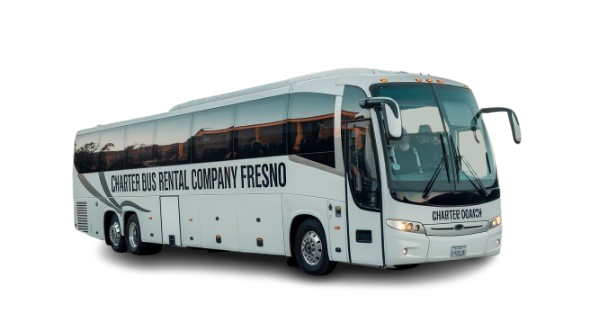
On a run this long, the vehicle is not just transportation, it is where the group spends half a workday. A 54-passenger charter bus is built for the distance, with reclining seats, climate control, an onboard restroom, and overhead and under-floor storage that swallows international luggage. The restroom alone changes the trip, since it means the group is not tied to the timing of a rest stop.
Why luggage space drives the vehicle choice
Bag volume is the quiet decider on a long-haul airport run. International travelers check the heaviest bags, often two per person, and those belong in the under-floor bays rather than balanced on an overhead rack. A full coach has the cargo room for a large group plus their checked bags and carry-ons. A smaller vehicle can run out of space before it runs out of seats, which means a suitcase ends up on someone’s lap for four hours. We ask for an honest bag count, including oversized items like ski bags, golf clubs, and instrument cases, so the vehicle we send has room for all of it.
Those amenities are the whole point on the LAX leg. People can rest, charge a phone where outlets are available, and arrive ready for a flight instead of stiff from four hours in a compact car. For a smaller group of 20 to 30, a minibus is more economical, but it gives up the restroom and some of the luggage space, which matters more on this distance than on a short hop. The trade-off is the same one we weigh for Bay Area airport transfers from Fresno, where comfort scales with the miles. Once we know the headcount and the bag load, we will point you to the size that fits the LAX run.
There is a real difference between a vehicle that gets a group there and one that gets them there ready to travel. After four hours folded into a compact car, people start a long-haul flight already stiff and tired. After four hours in a reclining coach seat with room to move, the same group walks into the terminal loose and rested. On a trip where the flight itself might run another six or ten hours, that head start is worth more than the seat count alone suggests. The vehicle becomes part of the journey rather than a chore to survive before it.
A sample LAX departure-day timeline
Picture a 38-person group with an evening international flight out of LAX. The timeline below shows how the departure window, the Grapevine, and the basin traffic stack up across the day. The plan runs backward from the airline counter, with cushion at every step.
- 10:00 AM coach loads luggage and boards in Fresno.
- 10:15 AM departure south on Highway 99.
- 12:30 PM rest stop past the Grapevine grade.
- 2:30 PM arrival at the LAX terminal loop, ahead of the afternoon crush.
- 2:45 PM group unloaded with bags at the departures level.
- 6:00 PM flight departs with the buffer intact.
For a morning flight, the departure shifts earlier to clear the Grapevine before dawn traffic. For the return, we track the inbound flight and stage the coach so the group is met at arrivals, not left waiting at the curb after a long flight. We confirm the plan the day before and watch the traffic forecast on the day. The result is a four-hour drive that feels like part of the trip, not an ordeal before it.
The exact times slide with the flight and the season. A winter departure may start earlier to clear the Grapevine before any weather sets in, while a clear summer morning gives back some of the cushion. We rebuild the timeline for your specific flight and share it ahead, so the group knows the boarding time in Fresno and can plan the night before. Once it is set, the travelers have one job: arrive at the pickup with their bags and let the driver handle the freeway, the grade, and the basin all the way to the curb.